


When you start Invisalign treatment, you may expect to wear a series of clear aligners that gradually straighten your teeth. However, during your consultation, your orthodontist may also mention small tooth-coloured bumps called Invisalign attachments. This can raise a few questions. Why are they needed? Will they be visible when you smile? Do they make the treatment uncomfortable?
These small additions play an important role in certain orthodontic movements. While clear aligners can move teeth gradually, some movements need extra support and control. This is where attachments help.
Let’s understand what Invisalign attachments are, how they work and why your orthodontist may recommend them during treatment.
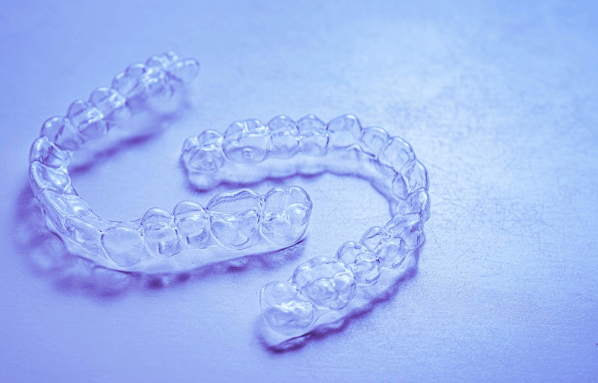
Invisalign attachments are small, tooth-coloured shapes made from dental composite material. An orthodontist bonds them to selected teeth to help clear aligners grip the teeth and guide their movement.
They come in different shapes and sizes depending on the movement required. Some look like tiny rectangular bumps, while others may have a more rounded appearance.
When you wear your aligners, these attachments fit into specially designed spaces in the trays. This contact helps the aligners apply controlled pressure in the direction needed to move teeth.
Clear aligners apply gentle pressure to gradually move teeth into planned positions. However, teeth do not move in only one direction. Some need to turn, move vertically or change their position within the jaw.
A smooth aligner may not provide enough grip or control for every movement. Attachments give the aligner additional contact points, helping your orthodontist manage these movements more effectively.
Here are some common situations where they may help:
Some teeth, particularly canines and premolars, may be turned or twisted rather than simply out of line. Attachments give the aligner a better grip on these teeth, helping guide them towards the correct position.
Certain teeth may sit higher or lower than their ideal position. These movements are known as intrusion and extrusion.
Attachments can help the aligner apply the required force to guide a tooth vertically.
Sometimes, a tooth may look straight from the front but still have an incorrect angle or position.
Attachments help the orthodontist gain better control over the tooth’s movement, including changes in its angle and root position.
In cases involving crowding, bite problems or significant misalignment, your orthodontist may need to coordinate several types of movement.
Attachments can provide additional support as the teeth gradually move into their planned positions.
It work by creating specific contact points between your teeth and aligners.
Your orthodontist first studies your teeth and prepares a digital treatment plan. This plan helps determine which teeth need attachments, where they should go and what shape may support the required movements.
Once the attachments are in place:
This combination helps improve control over tooth movement with Invisalign and supports the treatment plan.
No, every patient does not need attachments. Their requirement depends on the position of your teeth, the type of correction needed and the complexity of your treatment.
Some patients with minor spacing or alignment concerns may achieve their treatment goals without attachments. Others may need a few, while more complex cases may require several attachments on different teeth.
Your orthodontist decides this after examining your teeth, bite and digital scan.
It is also important to understand that having attachments does not mean your case is unusually difficult. They are simply one of the tools an orthodontist may use to guide specific movements.
Invisalign attachments usually remain on your teeth for as long as your treatment plan requires them.
Some may stay throughout most of the treatment, while your orthodontist may remove or change others as your teeth reach different stages of movement.
Once the required tooth movements are complete, the orthodontist removes the attachments using dental instruments and carefully smooths the remaining bonding material.
The process does not usually require drilling into the tooth. Your natural tooth surface remains intact when the orthodontist removes the material correctly.
Yes, Invisalign can work without attachments in selected cases. Patients who need relatively simple tooth movements may not require them.
However, when a treatment plan involves movements such as rotating a tooth, moving it vertically or controlling its angle, attachments may provide useful additional support.
Choosing to skip attachments when they are necessary may affect how accurately the aligners can perform the planned movements.
Your orthodontist will decide whether your treatment can progress without them or whether additional support is needed.
Attachments need the same daily attention as your natural teeth. Food particles and plaque can collect around their edges, so maintaining good oral hygiene is important.
Follow these simple habits during treatment:
If an attachment comes off and you are looking for best orthodontist in Mumbai the contact Dr. Sidharth Shah. Do not try to bond it back yourself. Your doctor will check whether it needs replacement.
Attachments can improve the aligner’s grip and help your orthodontist control certain tooth movements. They are particularly useful when the treatment involves movements that a smooth aligner may find difficult to manage.
However, attachments alone do not guarantee treatment success. The results also depend on accurate treatment planning, the condition of your teeth, regular monitoring and wearing your aligners as instructed.
Following your orthodontist’s advice throughout treatment plays an equally important role.
Invisalign attachments may look like small additions, but they can play an important role in guiding certain tooth movements. They help aligners grip selected teeth and provide better control when correcting rotations, tooth angles and vertical positioning.
If you are considering Invisalign Treatment in Bandra, Mumbai, understanding these small details can help you feel more prepared for the treatment process. Dr. Sidharth Shah, a Top 1% Invisalign Provider in India with a specialisation in Orthodontics and Dentofacial Orthopaedics, evaluates each patient’s alignment and bite before planning treatment.
As an experienced orthodontist in Bandra, Mumbai, Dr. Shah focuses on selecting the right approach based on individual dental needs. A detailed consultation can help you understand whether attachments are required and how they will support your treatment plan.