


You have finished your Invisalign aligners and your teeth finally look the way you wanted. Many patients think that their Invisalign treatment is completely over once they wear their last aligner.
In reality, there is one more important step: retainers. After Invisalign treatment, retainers help to adjust and keep your teeth in their new positions. Without proper retention, teeth can slowly move over time. So, understanding the post-Invisalign treatment phase can help you protect your new smile for years to come.
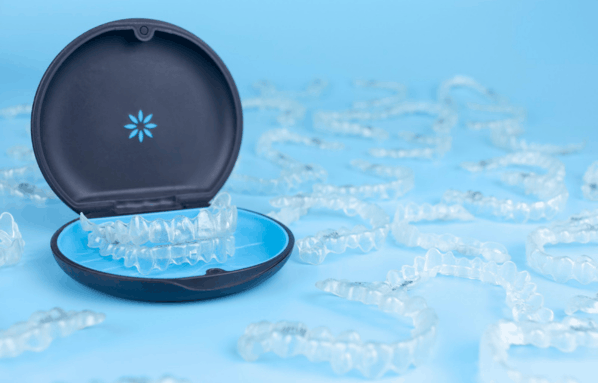
After you finish your planned Invisalign aligners, your orthodontist will check your teeth and bite. This helps to confirm that your teeth have reached the planned positions.
If everything looks good, your orthodontist will discuss the next stage of treatment: wearing retainers.
Your post Invisalign treatment care may include:
At this stage, the goal is to keep the teeth in their corrected positions.
Your teeth are surrounded by bone, gums, and other tissues that support their shape and position. After orthodontic treatment, these supporting tissues need time to adjust to the new positions of your teeth.
Teeth can also naturally move as you get older. Wearing retainers helps reduce unwanted movement and protects the alignment achieved during your treatment.
Invisalign treatment helps to move your teeth into their original position, and Retainers help to keep them in that new adjusted position. This is the reason why retainers are an important part of your overall aligner treatment journey.
There are two main types of retainers: removable retainers and fixed retainers. Depending on your teeth, treatment, and individual needs, your orthodontist may recommend one of these options.
These types of retainers look similar to clear aligners. These types of retainers are made to fit your original teeth and are easy to remove when eating, brushing, or cleaning them. Many patients find them convenient because they are less noticeable.
A fixed retainer is made with thin wire that is directly attached to the back of your teeth. It stays in place and helps prevent the teeth from moving. Because it remains attached to your teeth, you need to pay extra attention to cleaning around it.
Your orthodontist may initially recommend wearing your retainer more regularly and then move you to nighttime. The exact instructions depend on your teeth, bite, treatment, and how well your teeth are settling. In many cases, long-term retainer use is needed because teeth can naturally move over time.
So, do not stop wearing your retainer simply because your teeth look straight.
It can be tempting to stop wearing your retainer once your smile looks stable. However, stopping without speaking to your orthodontist can allow your teeth to move again. The changes may not be noticeable immediately. Over time, small movements will start to be noticed.
Before stopping wearing retainers after Invisalign, speak to your orthodontist first. They will check your teeth and make a proper schedule that is appropriate for you.
Keeping your teeth straight is not only about wearing your retainer. Your everyday oral care also matters. Follow these simple habits:
These simple habits can help you maintain both your smile and your oral health.
Your retainer needs regular care if you want it to remain clean and usable for longer.
If you have a removable retainer, clean it regularly according to your orthodontist’s instructions. Handle the retainer carefully and avoid bending or twisting it.
Always keep it in its case when you are not wearing it.
One common mistake is wrapping a retainer in tissue while eating and accidentally throwing it away. Keeping the case with you can help prevent this.
If your retainer develops a crack, becomes loose, feels uncomfortable, or no longer fits properly, get it checked. Do not try to adjust or repair it at home by yourself.
Sometimes, patients notice that their retainer feels tighter than before. This can happen if the teeth have moved slightly.
You may also notice:
Do not ignore these changes.
If your retainer does not fit properly, do not force it into that place. An orthodontist can check your teeth and decide whether you need a new retainer or any further treatment.
The active part of your Invisalign treatment may end when you complete your planned aligners, but your smile still needs care afterwards.
This is where retention becomes important.
Your teeth can naturally move as time passes, even after successful orthodontic treatment. Wearing your retainer as advised helps maintain the alignment you achieved.
So, your last Invisalign aligner is not necessarily the end of your smile journey. It is the beginning of the retention journey.
Finishing Invisalign treatment is one of the important steps, but maintaining the result is more important than achieving it.
Wearing your retainer as advised, keeping it clean, maintaining good oral hygiene, and attending follow-up appointments can help you protect your new smile.
If you are looking for the best Invisalign treatment in Bandra or have questions about retainers after Invisalign, a personalised assessment can help you understand what your teeth need after treatment.
Then, visit Dr. Sidharth Shah, one of the best Invisalign orthodontists in Mumbai and a Top 1% Invisalign Provider in India, to discuss your Invisalign treatment, retainer options, and how to maintain your results. With his clinic in Bandra, Mumbai, you can get personalised guidance based on your teeth and long-term smile goals.